
 = Partner Site
Kindergarten Spelling Words
This spelling curriculum provides 36 weekly word lists that progress through phonics skills developmentally appropriate for kindergarten learners. Each week focuses on a specific phonics pattern—from beginning sounds to CVC words to consonant digraphs—along with bonus words for students who need an extra challenge and high-frequency Dolch sight words essential for early reading success.
More Kindergarten Resources
Kindergarten Spelling Words for 1st Quarter: Beginning Sounds & Word Families
Students start by connecting letters to their sounds in simple words like apple, bat, and dog. Then they move into word families (-at, -it, -ot, -ap, -ip, -op), learning how changing one letter creates new words: cat becomes hat, bat, mat.

Week 1 Spelling List
Week 1 spelling list featuring beginning sounds with words including apple, bat, car, dog, elephant, fan, gum, hat, igloo, and jump plus bonus words and sight words.
Week 2 Spelling List
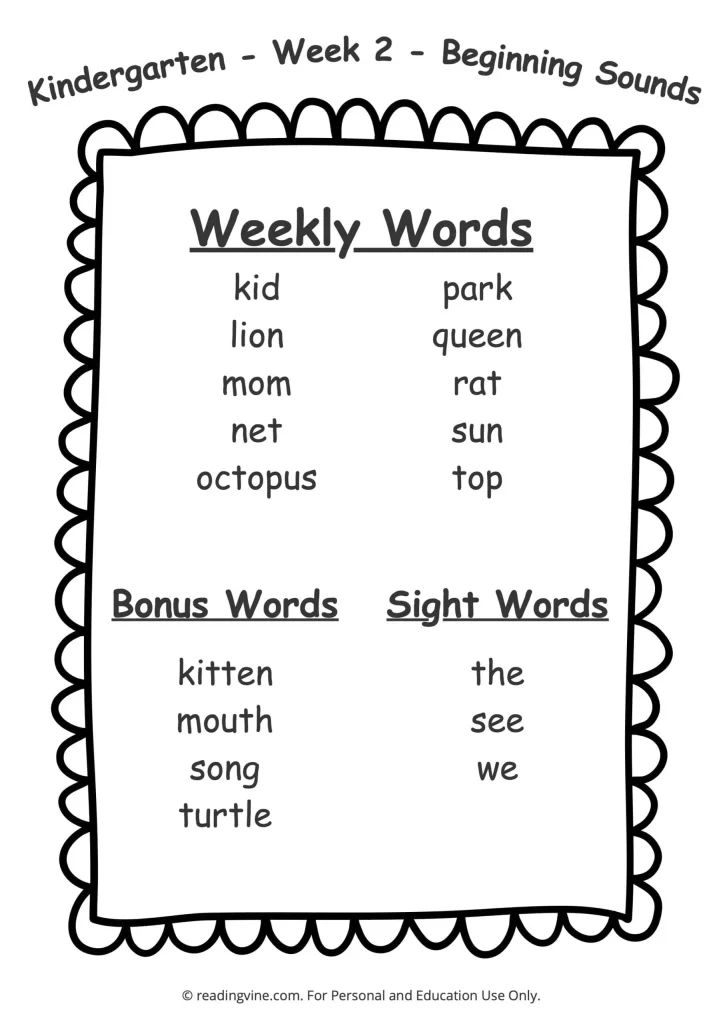
Week 2 spelling list focusing on beginning sounds with words including kid, lion, mom, net, octopus, park, queen, rat, sun, and top plus bonus words and sight words.
Week 3 Spelling List
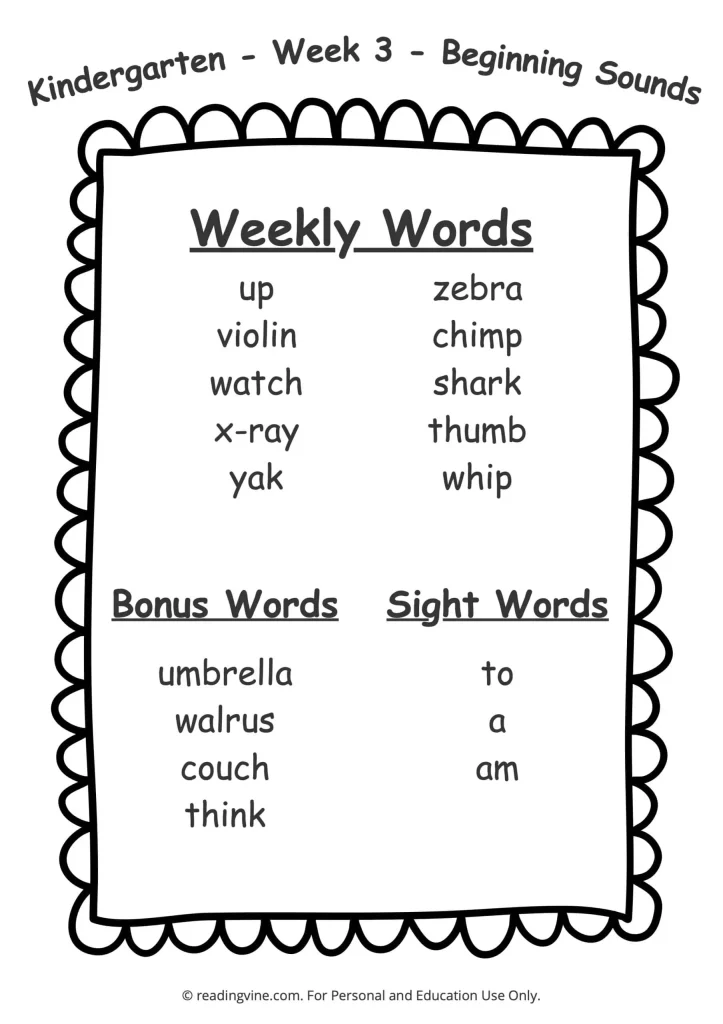
Week 3 spelling list featuring beginning sounds with words including up, violin, watch, x-ray, yak, zebra, chimp, shark, thumb, and whip plus bonus words and sight words.
Week 4 Spelling List
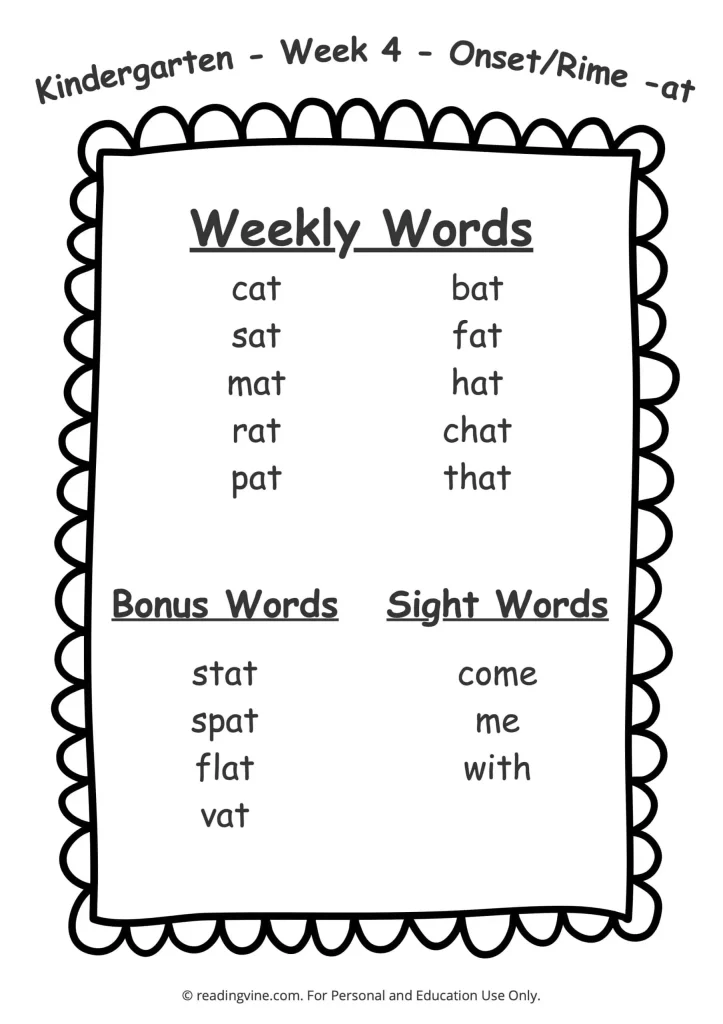
Week 4 spelling list focusing on onset/rime -at words including cat, sat, mat, rat, pat, bat, fat, hat, chat, and that plus bonus words and sight words.
Week 5 Spelling List
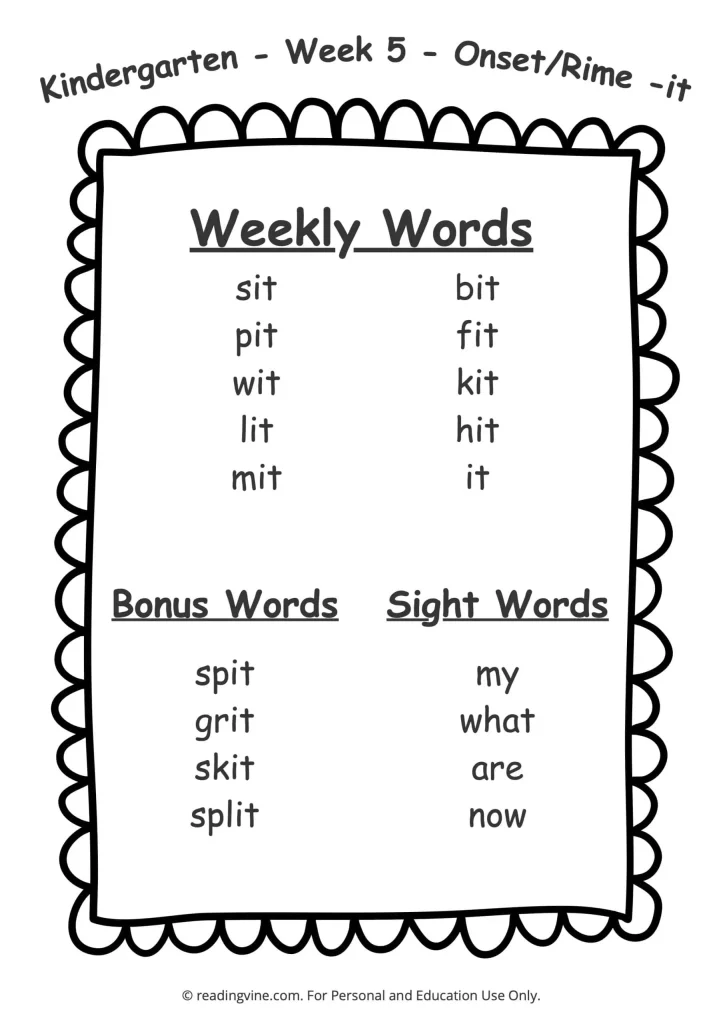
Week 5 spelling list featuring onset/rime -it words including sit, pit, wit, lit, mit, bit, fit, kit, hit, and it plus bonus words and sight words.
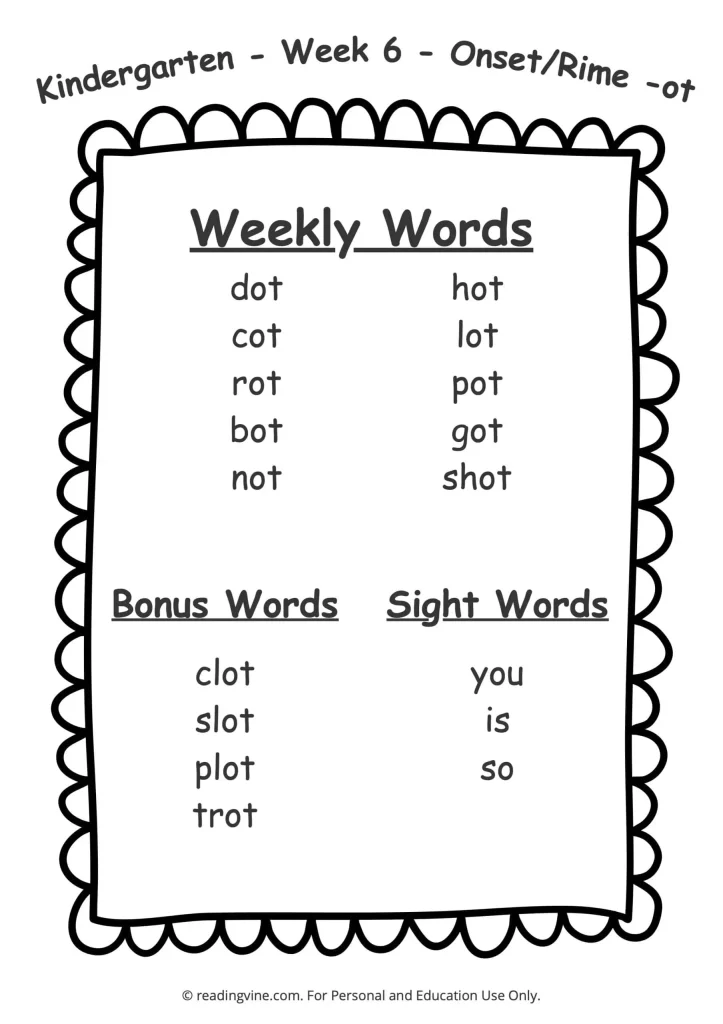
Week 6 Spelling List
Week 6 spelling list focusing on onset/rime -ot words including dot, cot, rot, bot, not, hot, lot, pot, gat, and shot plus bonus words and sight words.
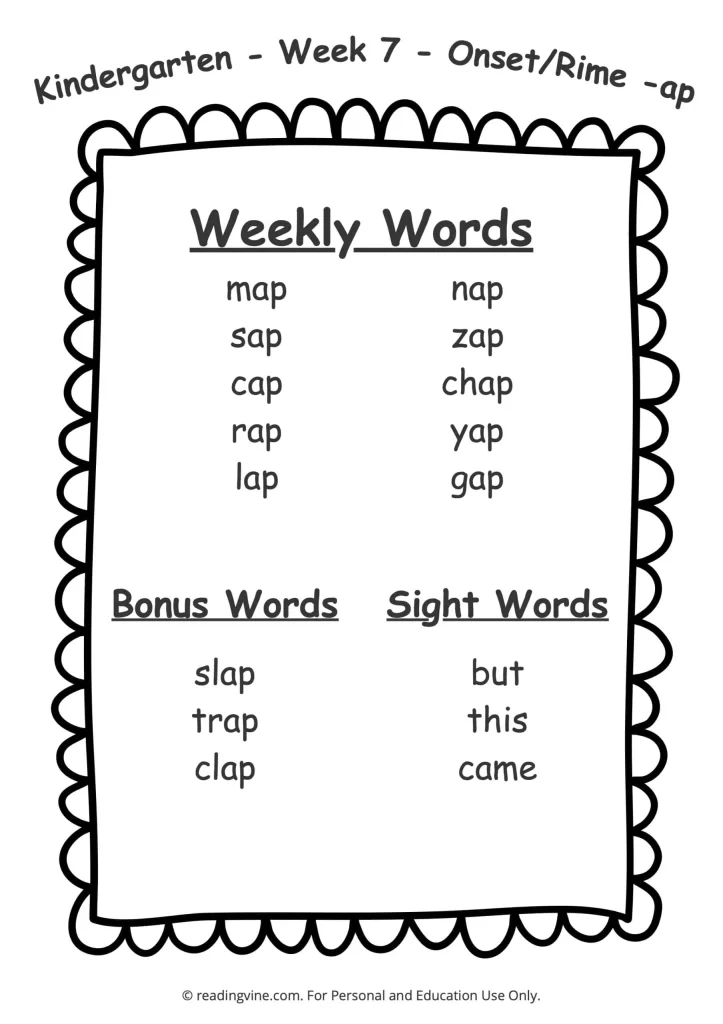
Week 7 Spelling List
Week 7 spelling list featuring onset/rime -ap words including map, sap, cap, rap, lap, nap, zap, chap, yap, and gap plus bonus words and sight words.
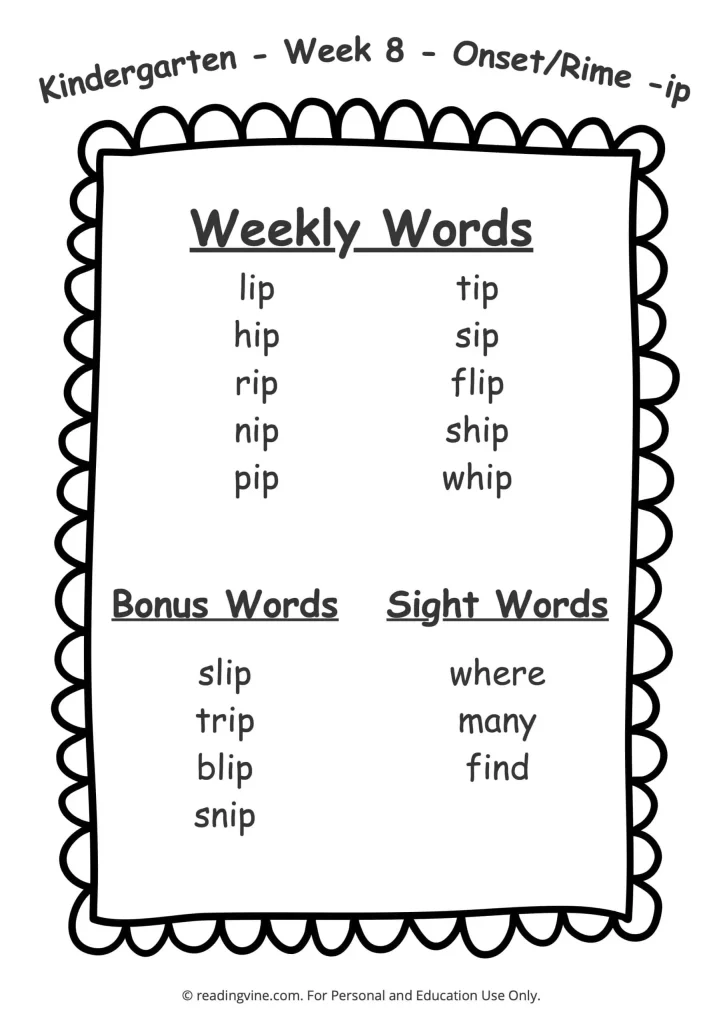
Week 8 Spelling List
Week 8 spelling list focusing on onset/rime -ip words including lip, hip, rip, nip, pip, tip, sip, flip, ship, and whip plus bonus words and sight words.
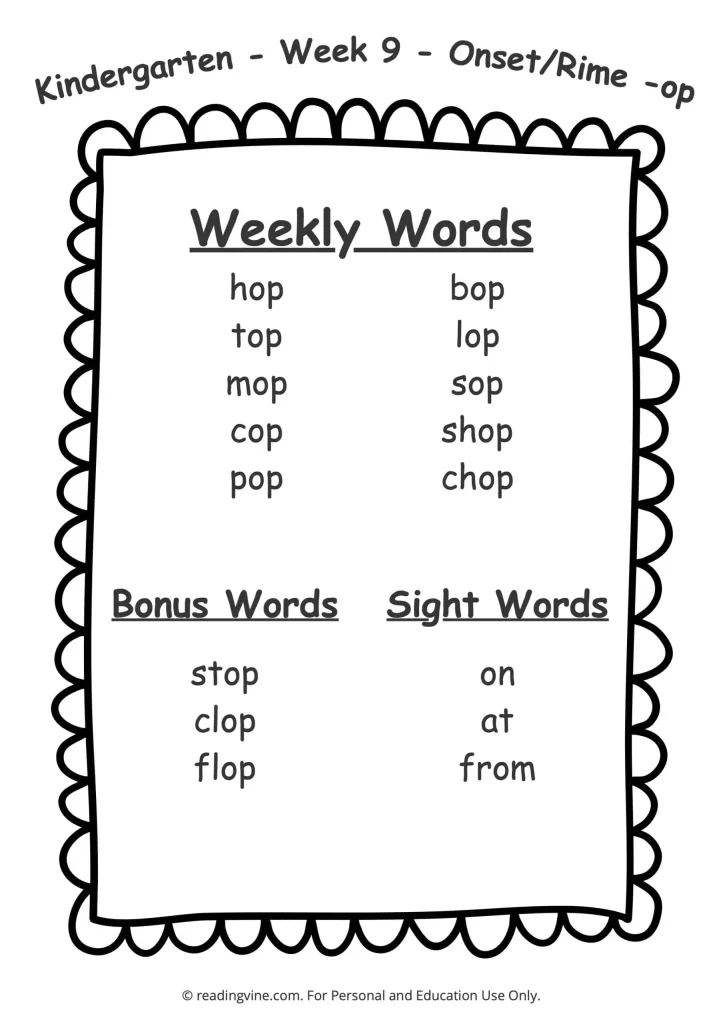
Week 9 Spelling List
Week 9 spelling list featuring onset/rime -op words including hop, top, mop, cop, pop, bop, lop, sop, shop, and chop plus bonus words and sight words.
Kindergarten Spelling Words for 2nd Quarter: Short Vowel CVC Words
Building on word families, students now read and spell CVC (consonant-vowel-consonant) words across all five short vowel sounds. They work through short A, I, O, U, and E words, then practice distinguishing between similar sounds like A/I and U/O.
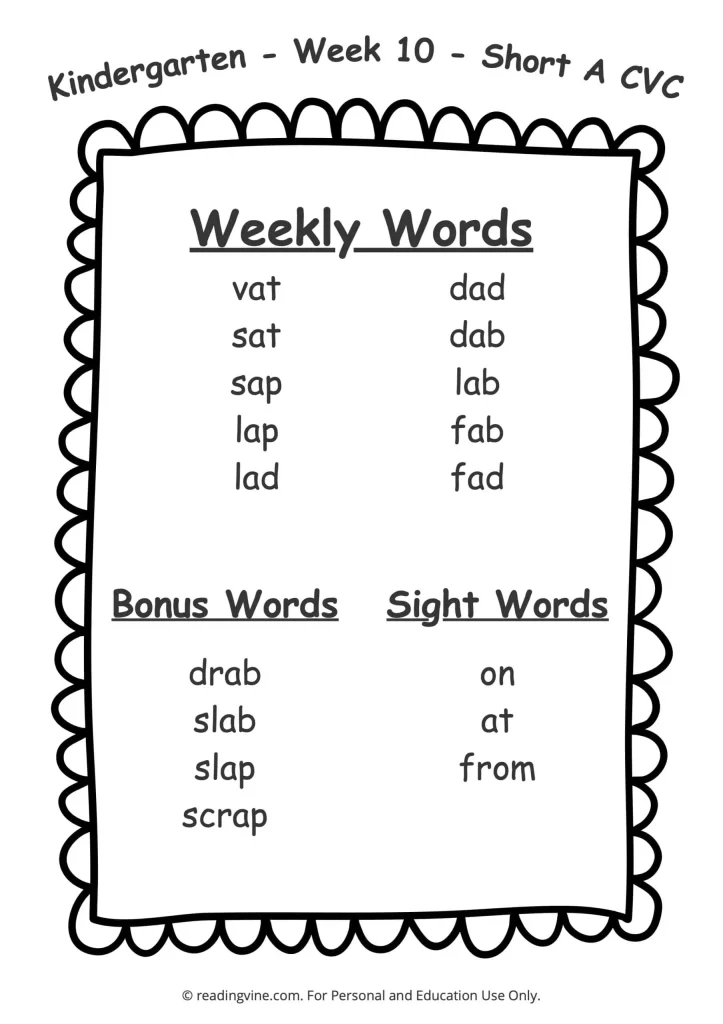
Week 10 Spelling List
Week 10 spelling list focusing on short A CVC words including vat, sat, sap, lap, lad, dad, dab, lab, fab, and fad plus bonus words and sight words.
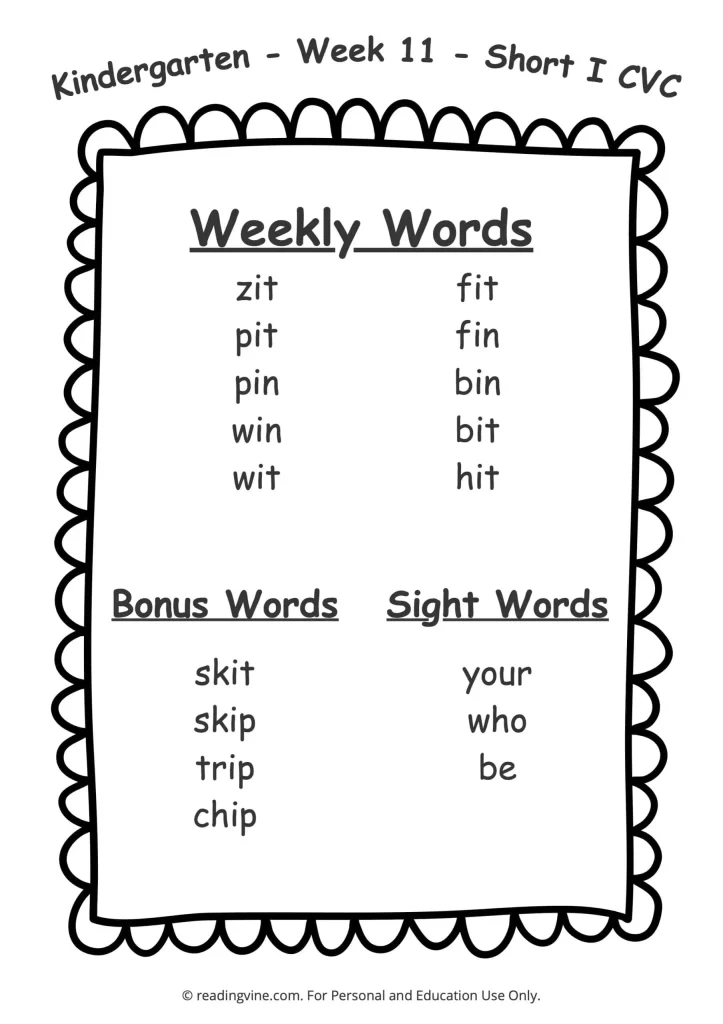
Week 11 Spelling List
Week 11 spelling list featuring short I CVC words including zit, pit, pin, win, wit, fit, fin, bin, bit, and hit plus bonus words and sight words.
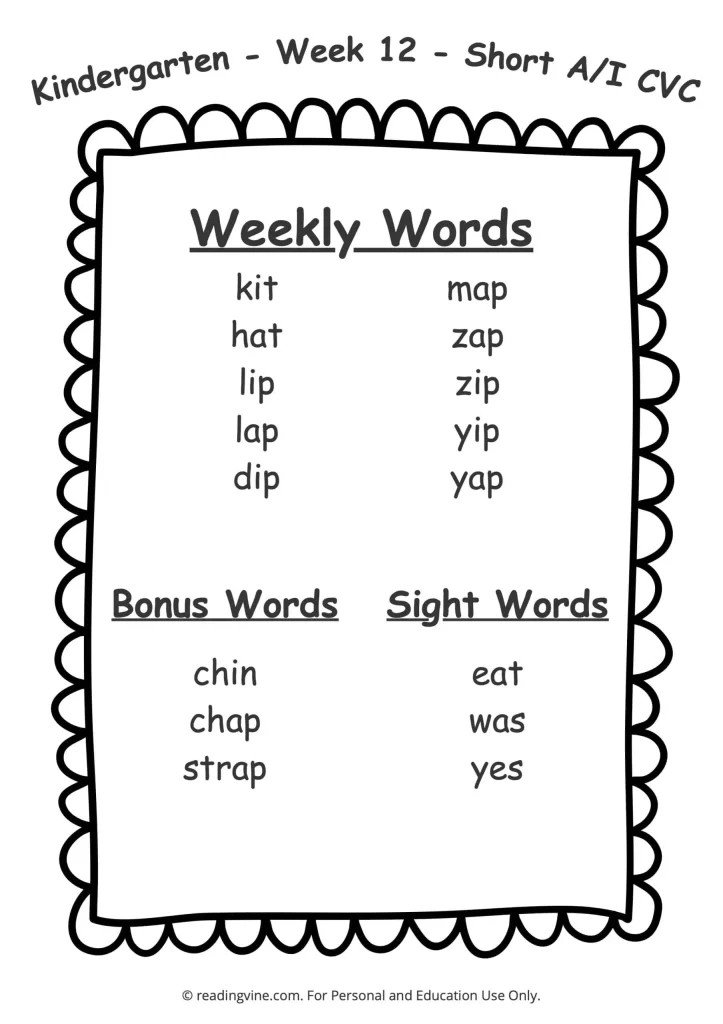
Week 12 Spelling List
Week 12 spelling list focusing on short A/I vowel sounds in CVC words including kit, hat, lip, lap, dip, map, zap, zip, yip, and yap plus bonus words and sight words.
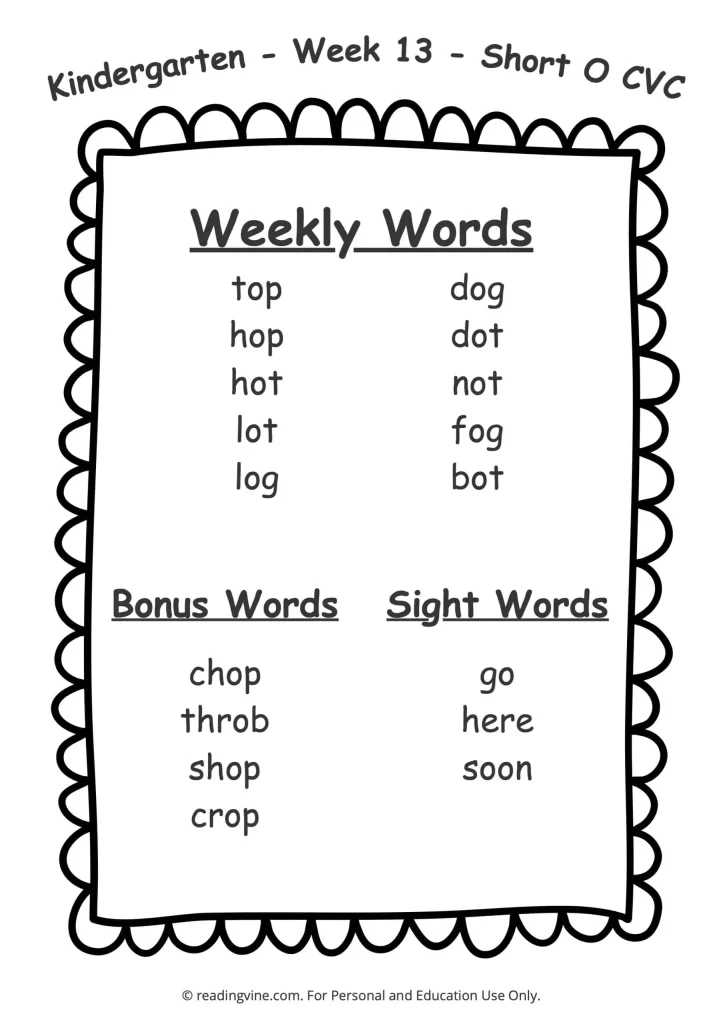
Week 13 Spelling List
Week 13 spelling list featuring short O CVC words including top, hop, hot, lot, log, dog, dot, not, fog, and bot plus bonus words and sight words.
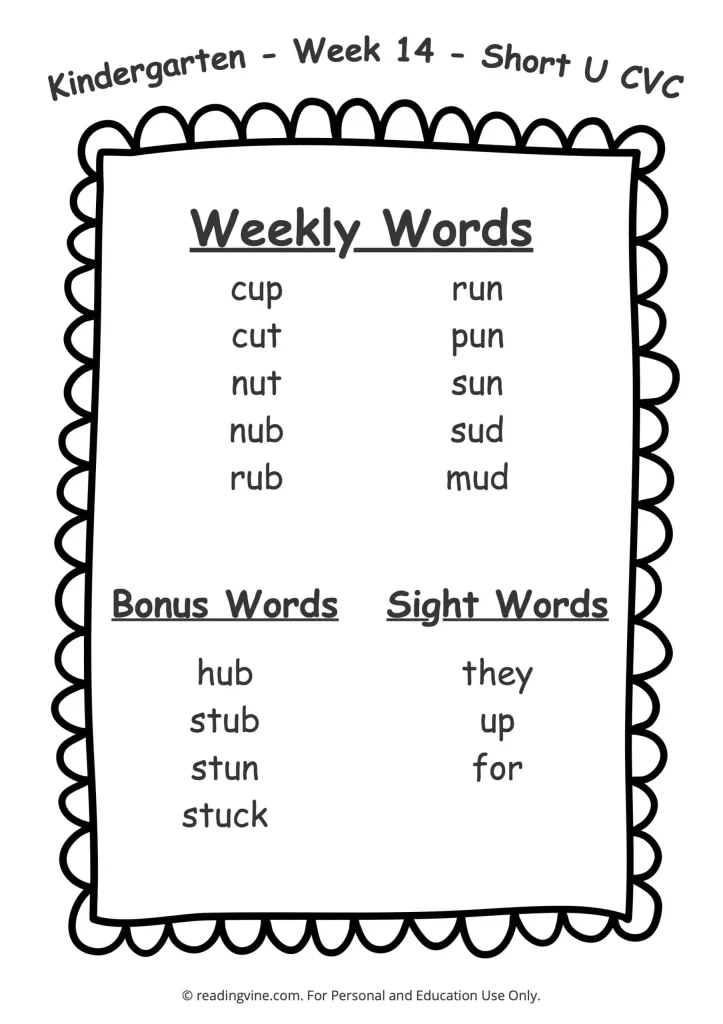
Week 14 Spelling List
Week 14 spelling list focusing on short U CVC words including cup, cut, nut, nub, rub, run, pun, sun, sud, and mud plus bonus words and sight words.
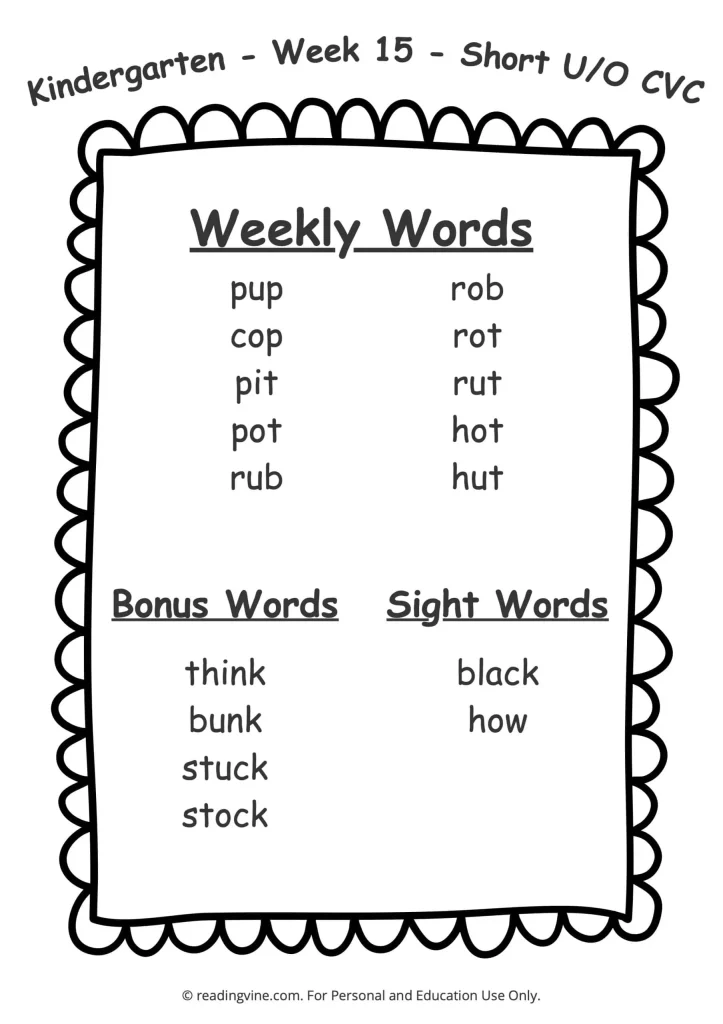
Week 15 Spelling List
Week 15 spelling list featuring short U/O vowel sounds in CVC words including pup, cop, pit, pot, rub, rob, rot, rut, hot, and hut plus bonus words and sight words.
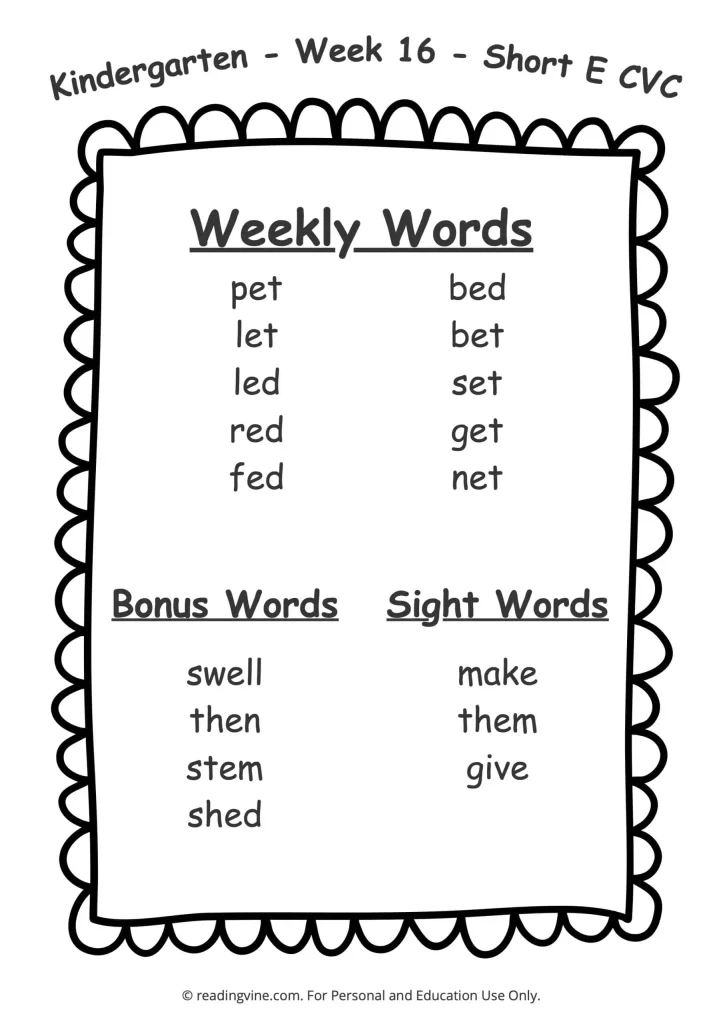
Week 16 Spelling List
Week 16 spelling list focusing on short E CVC words including pet, let, led, red, fed, bed, bet, set, get, and net plus bonus words and sight words.
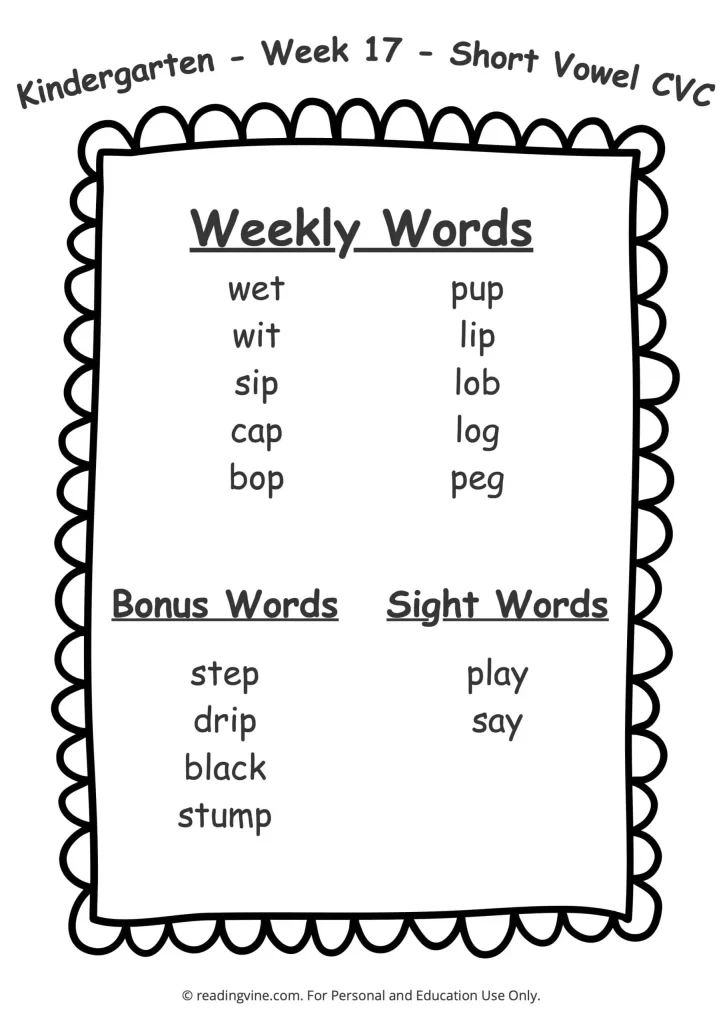
Week 17 Spelling List
Week 17 spelling list featuring mixed short vowel CVC words including wet, wit, sip, cap, lob, log, bop, pup, lip, and peg plus bonus words and sight words.
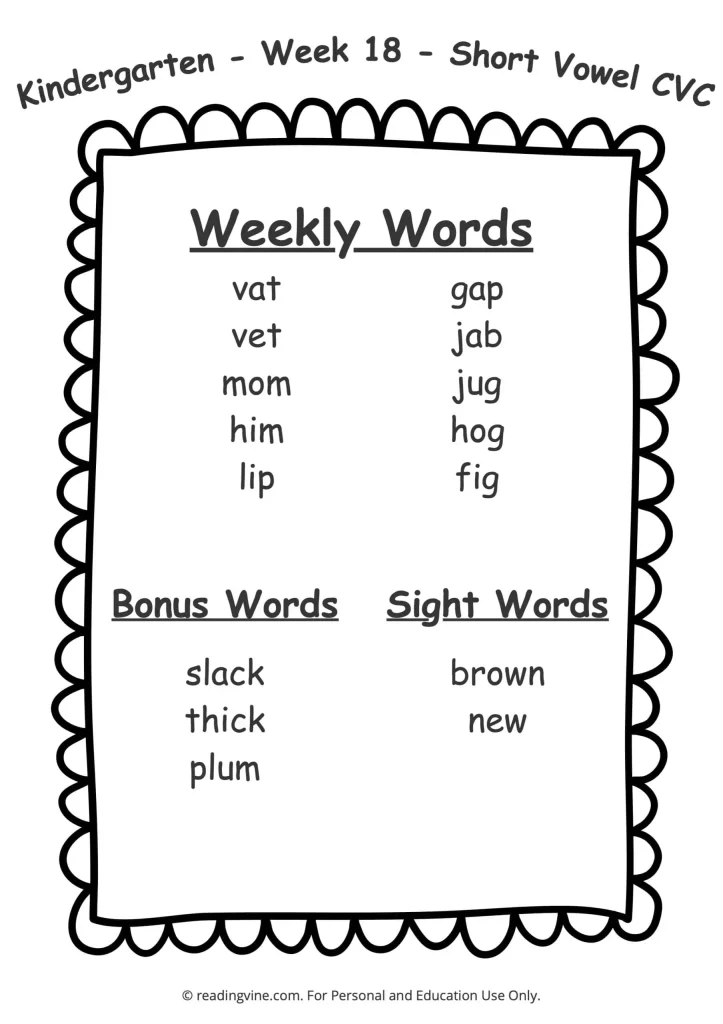
Week 18 Spelling List
Week 18 spelling list focusing on short vowel CVC words including vat, vet, mom, him, lip, gap, jab, jug, hog, and fig plus bonus words and sight words.
Kindergarten Spelling Words for 3rd Quarter: Consonant Digraphs
With CVC words mastered, students learn that two letters can work together to make one sound. They tackle common digraphs—CH (chip), SH (ship), TH (this), WH (whip)—then move to words ending in CK like pack, kick, and duck.
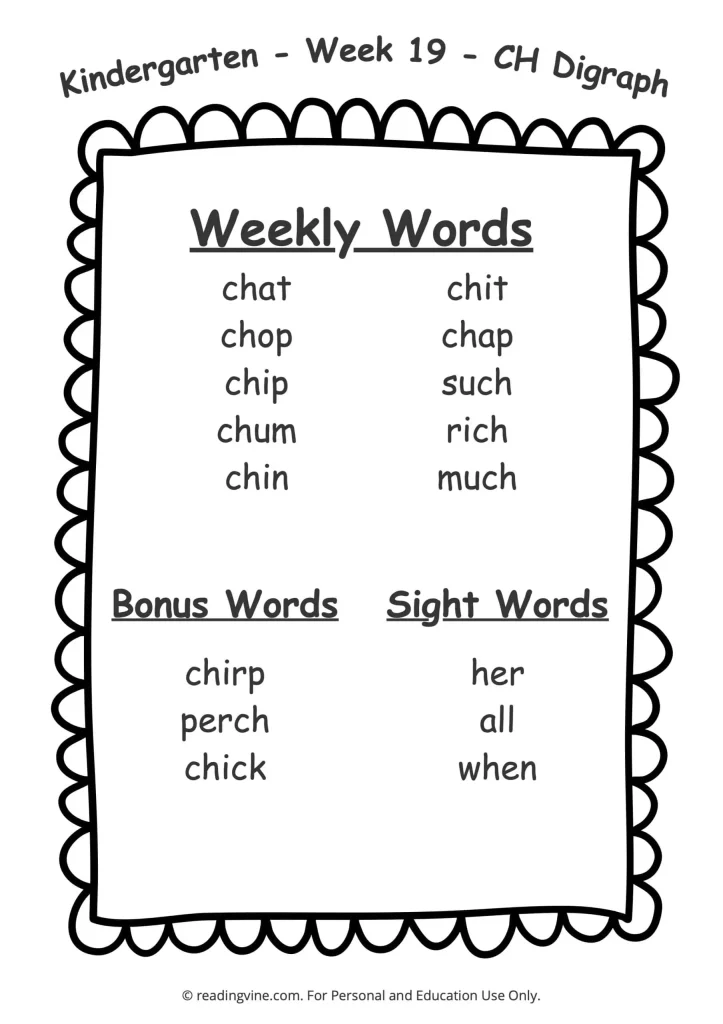
Week 19 Spelling List
Week 19 spelling list focusing on CH digraph words including chat, chop, chip, chum, chin, chit, chap, such, rich, and much plus bonus words and sight words.
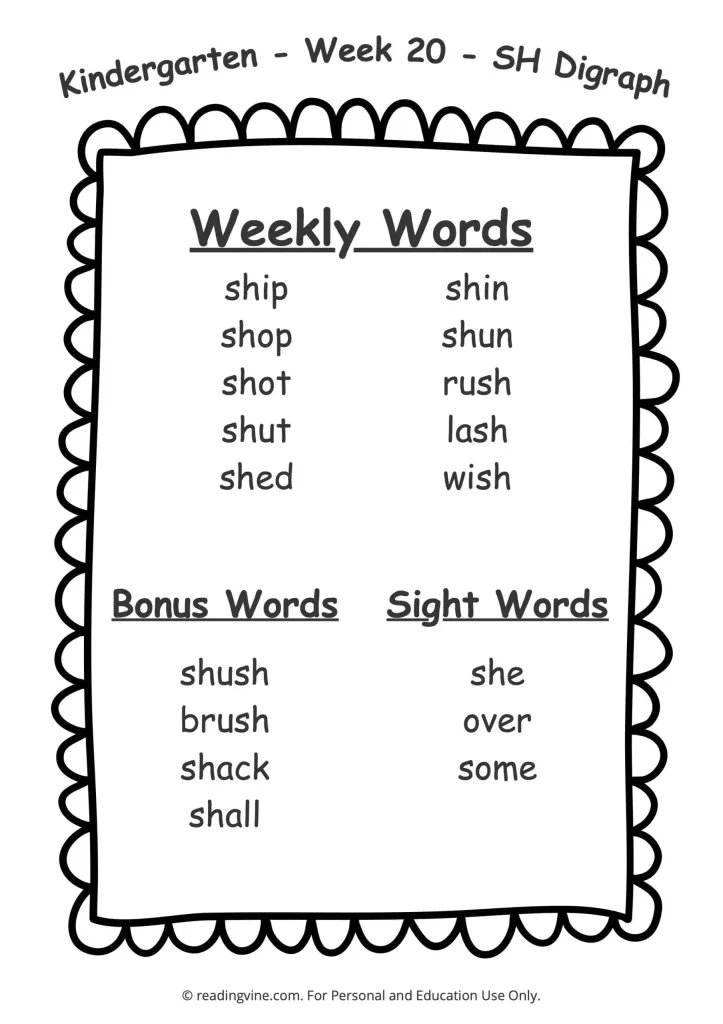
Week 20 Spelling List
Week 20 spelling list featuring SH digraph words including ship, shop, shot, shut, shed, shin, shun, rush, lash, and wish plus bonus words and sight words.
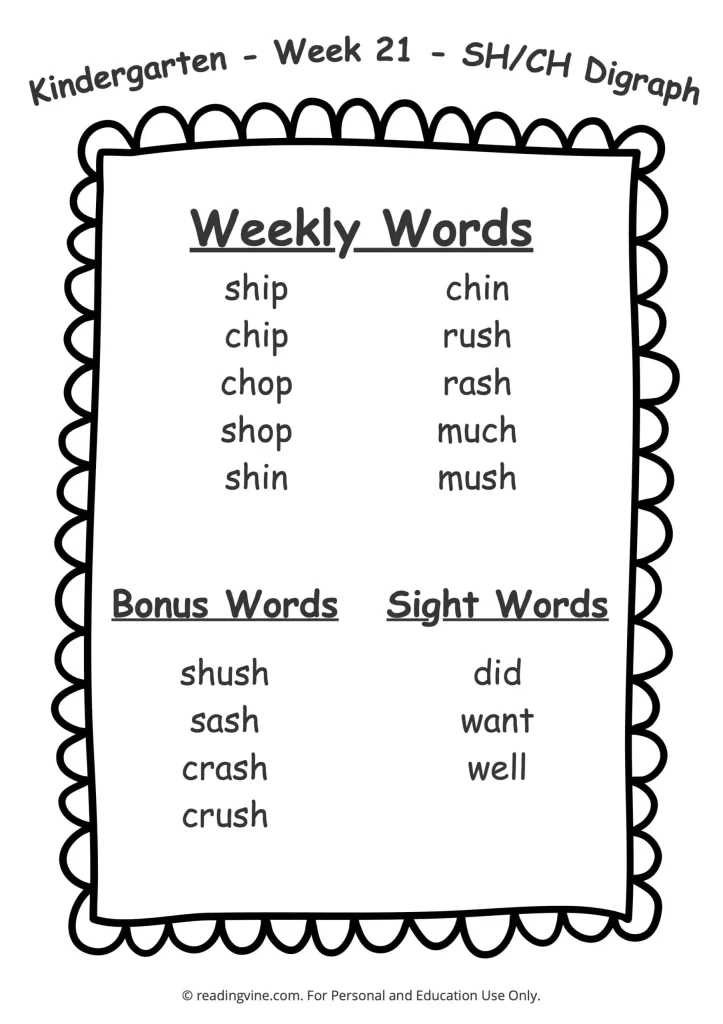
Week 21 Spelling List
Week 21 spelling list focusing on SH/CH digraph words including ship, chip, chop, shop, shin, chin, rush, rash, much, and mush plus bonus words and sight words.
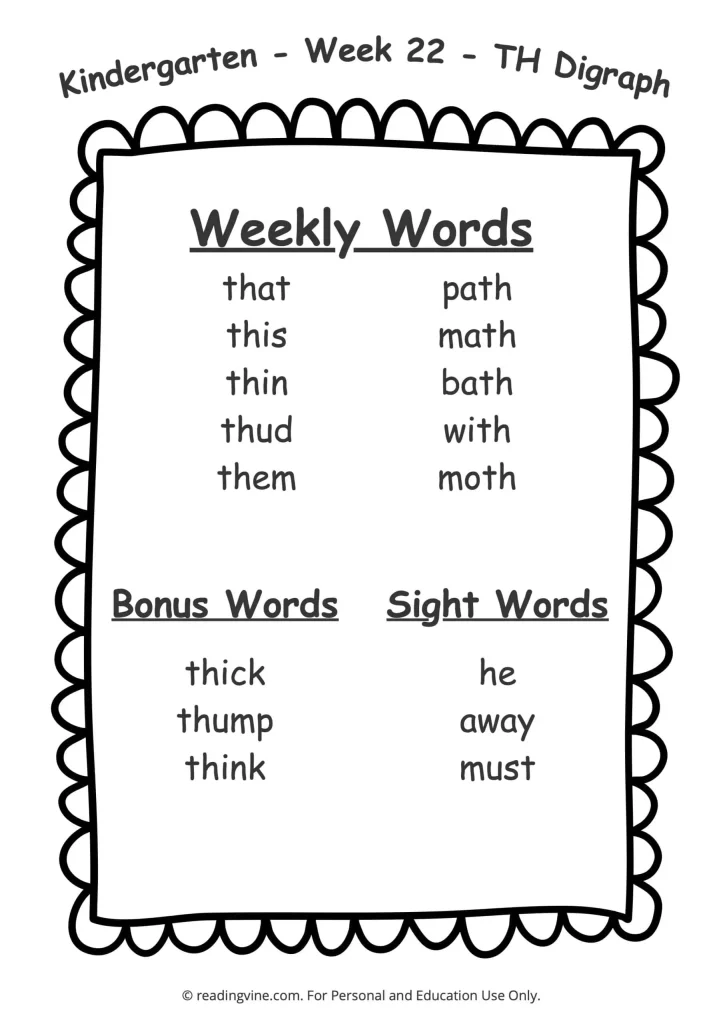
Week 22 Spelling List
Week 22 spelling list featuring TH digraph words including that, this, thin, thud, them, path, math, bath, with, and moth plus bonus words and sight words.
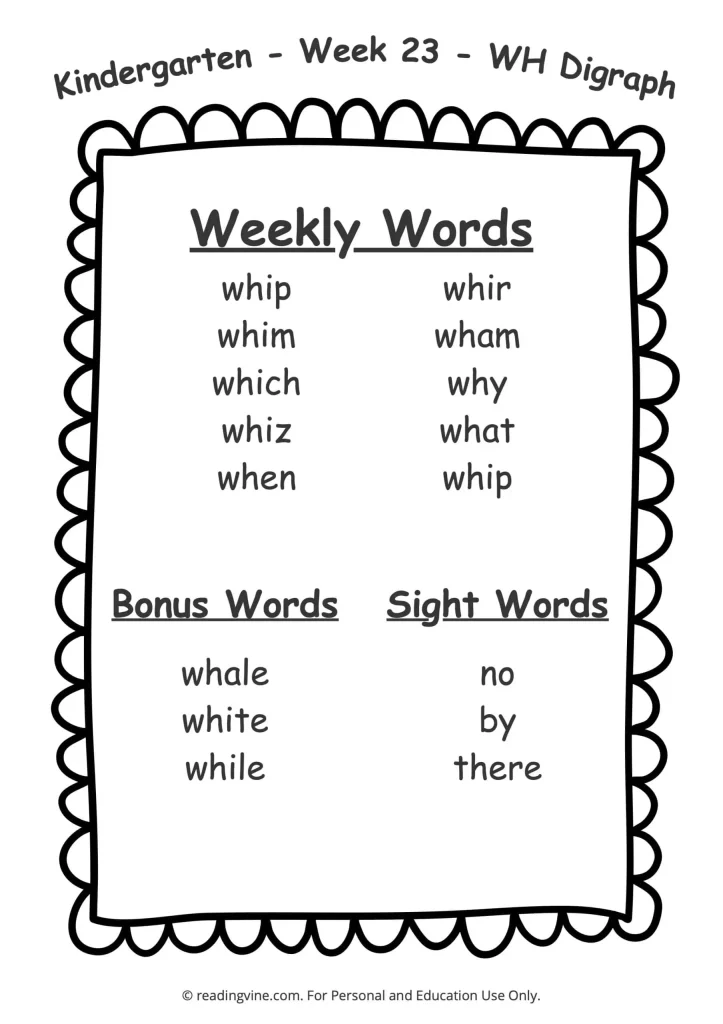
Week 23 Spelling List
Week 23 spelling list focusing on WH digraph words including whip, whim, which, whiz, when, whir, wham, why, what, and whip plus bonus words and sight words.
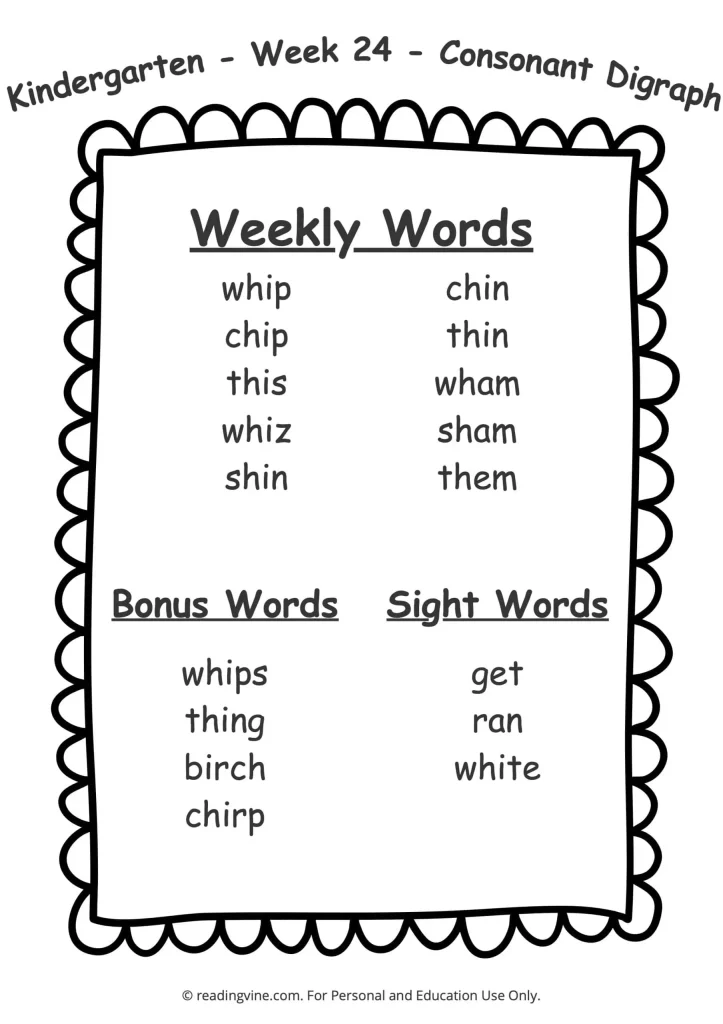
Week 24 Spelling List
Week 24 spelling list featuring mixed consonant digraph words including whip, chip, this, whiz, shin, chin, wham, sham, and them plus bonus words and sight words.
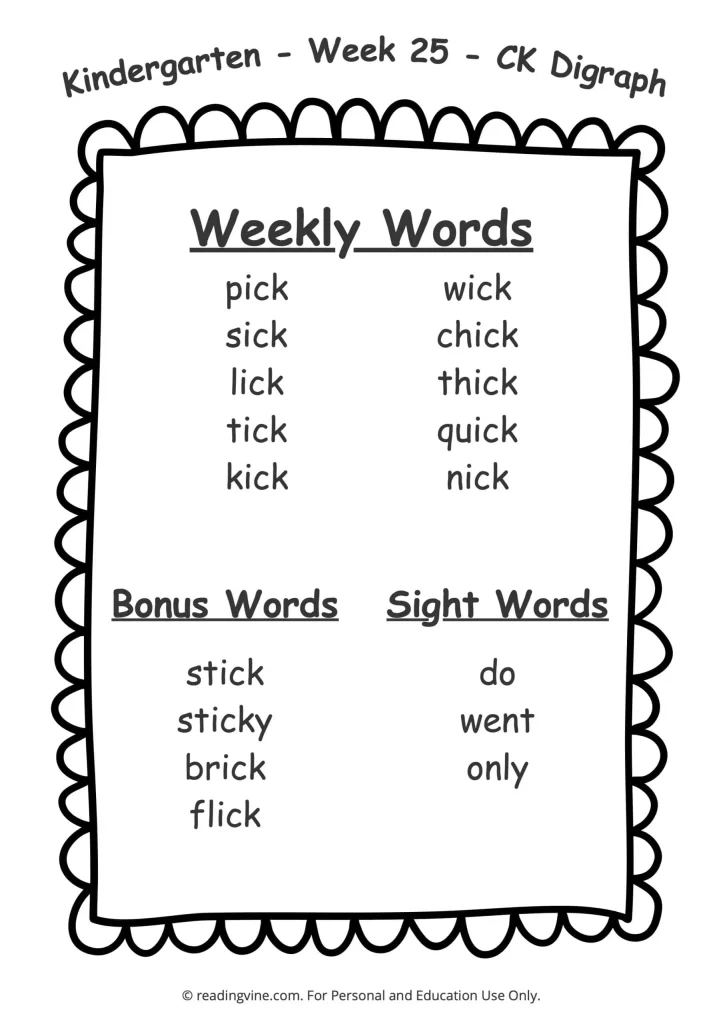
Week 25 Spelling List
Week 25 spelling list focusing on CK digraph words including pick, sick, lick, tick, kick, wick, chick, thick, quick, and nick plus bonus words and sight words.
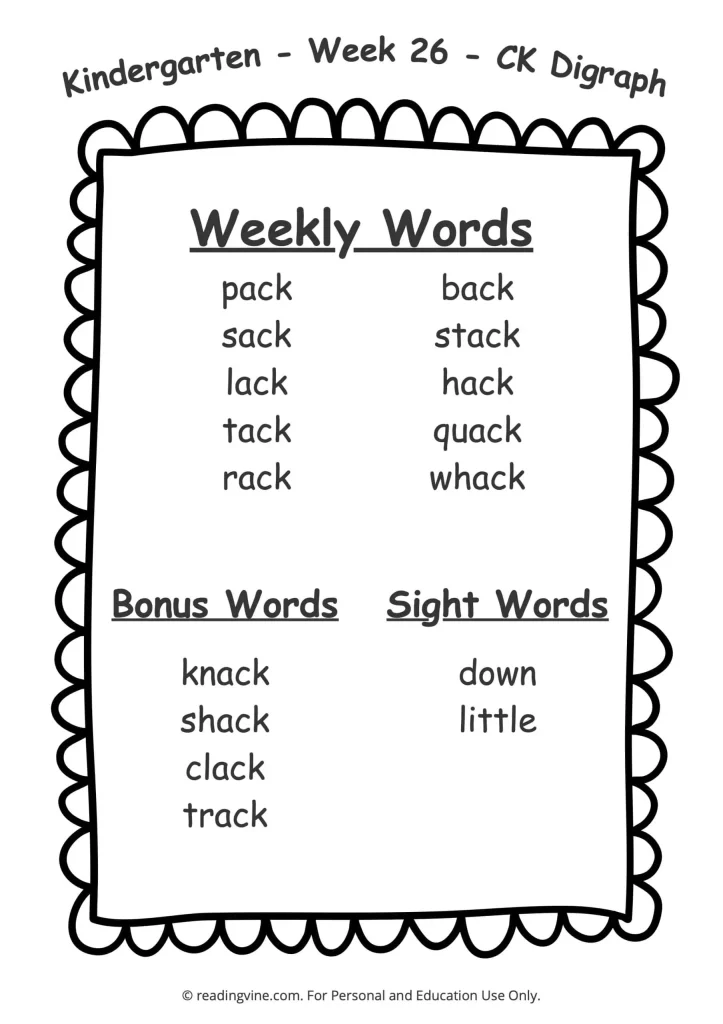
Week 26 Spelling List
Week 26 spelling list featuring CK digraph words including pack, sack, lack, tack, rack, back, stack, hack, quack, and whack plus bonus words and sight words.
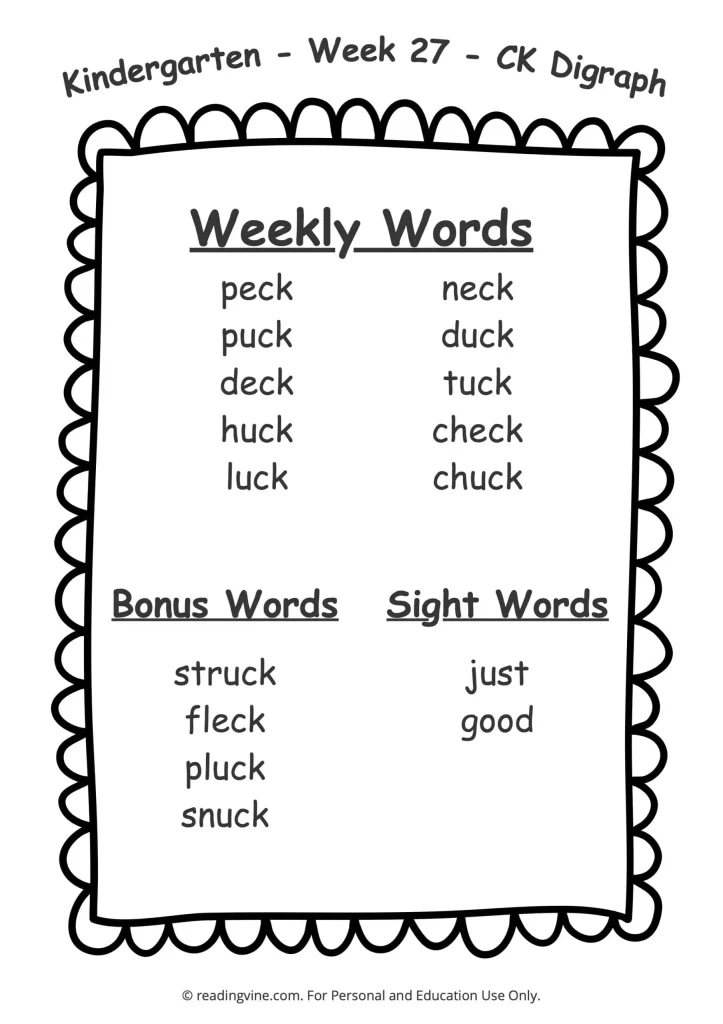
Week 27 Spelling List
Week 27 spelling list focusing on CK digraph words including peck, puck, deck, huck, luck, neck, duck, tuck, check, and chuck plus bonus words and sight words.
Kindergarten Spelling Words for 4th Quarter: Long Vowel CVCe Words
Ready for the next challenge, students discover the “magic e” rule: when a word ends in silent e, the vowel says its name. They practice long A (make), long I (mine), long O (bone), and long U (tune), then work with mixed CVCe patterns.
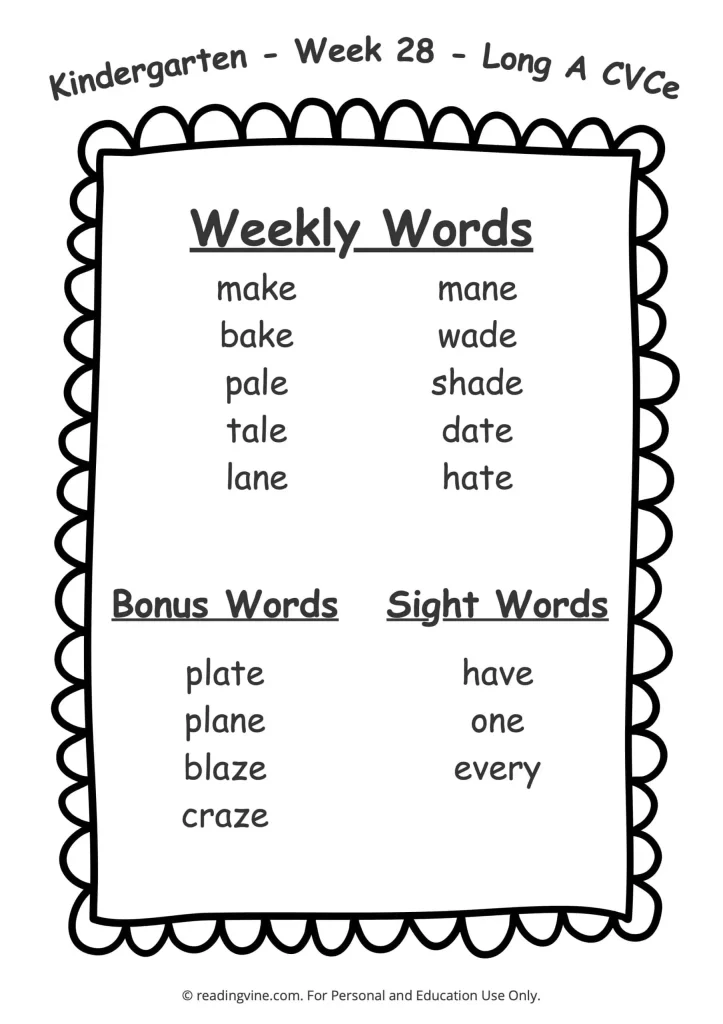
Week 28 Spelling List
Week 28 spelling list featuring long A CVCe words including make, bake, pale, tale, lane, mane, shade, date, hate, and plate plus bonus words and sight words.
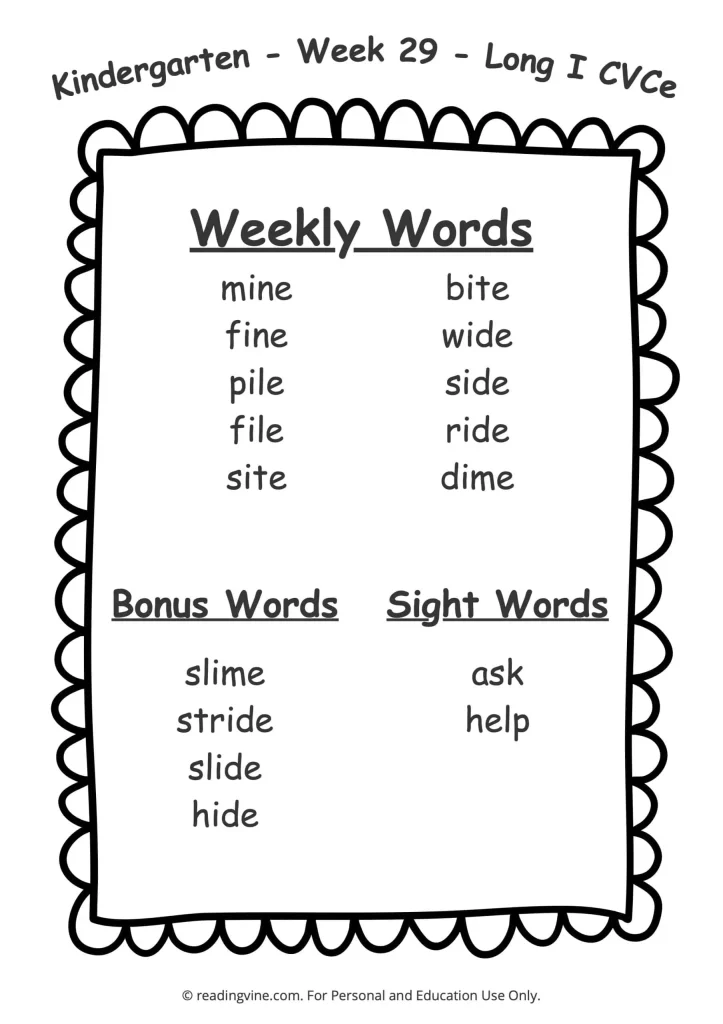
Week 29 Spelling List
Week 29 spelling list focusing on long I CVCe words including mine, fine, pile, file, site, bite, wide, side, ride, and dime plus bonus words and sight words.

Week 30 Spelling List
Week 30 spelling list featuring long A/I CVCe words including lane, line, male, mile, pine, pane, dime, dame, fate, and kite plus bonus words and sight words.
Week 31 Spelling List
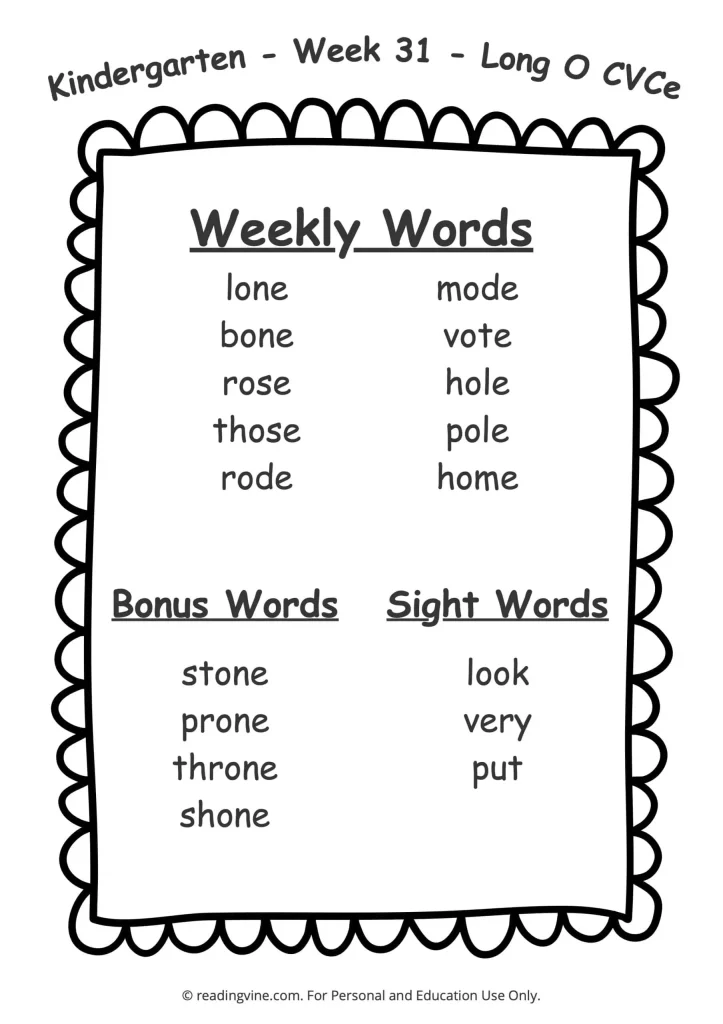
Week 31 spelling list focusing on long O CVCe words including lone, bone, rose, those, rode, mode, vote, hole, pole, and home plus bonus words and sight words.

Week 32 Spelling List
Week 32 spelling list featuring long U CVCe words including tune, mule, rule, dune, rude, fume, cube, tube, cute, and chute plus bonus words and sight words.
Week 33 Spelling List
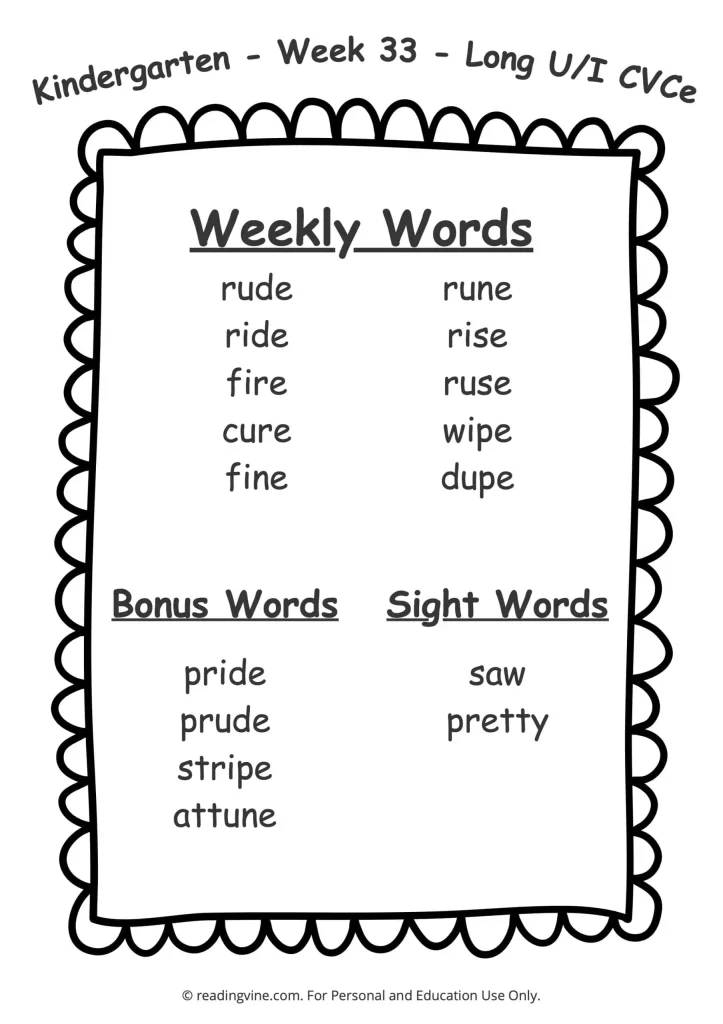
Week 33 spelling list focusing on long U/I CVCe words including rude, ride, fire, cure, fine, rune, rise, ruse, wipe, and dupe plus bonus words and sight words.

Week 34 Spelling List
Week 34 spelling list featuring mixed long vowel CVCe words including Pete, mere, these, here, Zeke, shape, whine, whale, shame, and chime plus bonus words and sight words.
Week 35 Spelling List
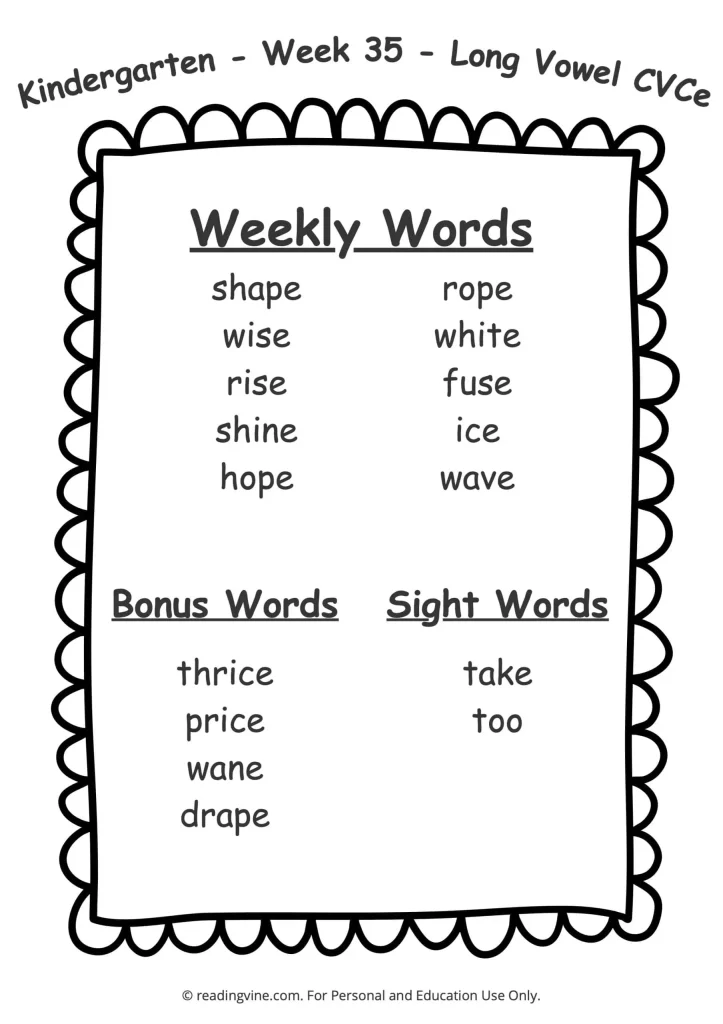
Week 35 spelling list focusing on long vowel CVCe words including shape, wise, rise, shine, hope, rope, white, fuse, ice, and wave plus bonus words and sight words.
Week 36 Spelling List
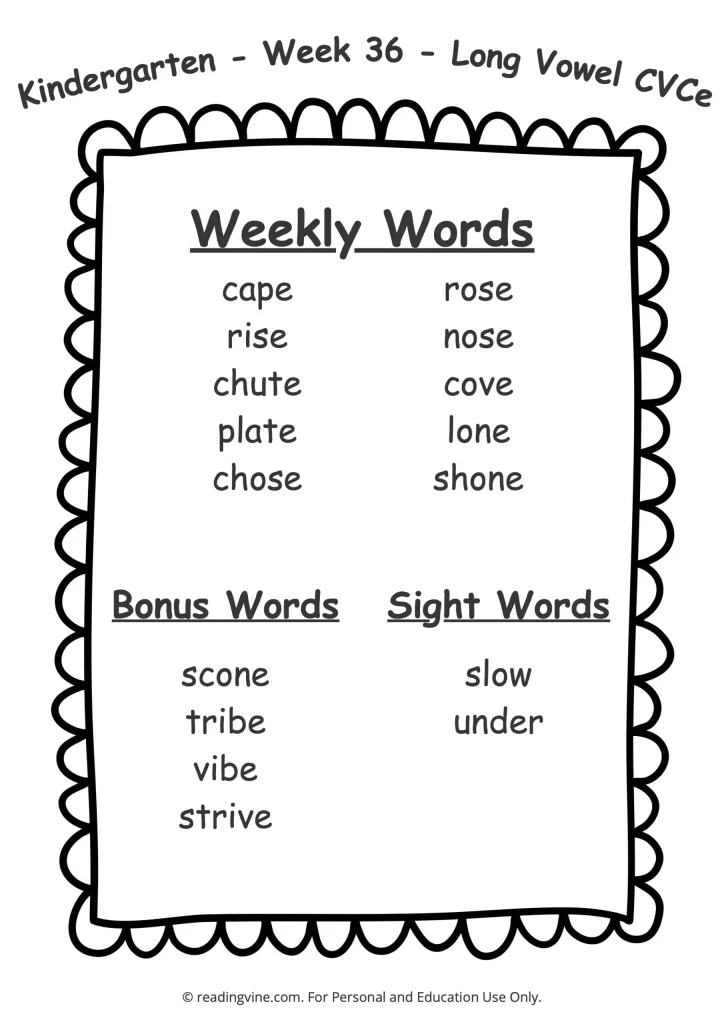
Week 36 spelling list featuring long vowel CVCe words including cape, rise, chute, plate, chose, rose, nose, cove, lone, and shone plus bonus words and sight words.
How can this curriculum help students learn to read and write?
This curriculum follows research-backed methods proven to help kindergarteners develop foundational literacy skills. By systematically teaching letter sounds, word families, and spelling patterns, students build the decoding skills they need to read unfamiliar words and the encoding skills they need to write. The progression from simple beginning sounds to more complex CVCe patterns gives learners a solid phonics foundation that supports both reading fluency and spelling confidence.
What research supports this curriculum?
This curriculum uses a systematic, explicit approach to phonics instruction aligned with the Science of Reading. Skills build sequentially—each week’s pattern reinforces previously learned concepts while introducing new ones. This structured progression activates prior knowledge and helps learners make connections between familiar and new information, which research shows accelerates literacy development in early readers.
How do I use these weekly spelling lists?
Each weekly list includes 10 core words, bonus words for extension, and sight words for high-frequency practice. We recommend introducing 2-3 words per day, practicing through writing, oral spelling, and word-building activities. Use the bonus words for students ready for more challenge, and incorporate sight words into daily reading practice. Download the scope and sequence sheet to see the full year’s progression and plan ahead.
