= Partner Site
Frayer Model Vocabulary Words Templates
The Frayer Model is one of the most effective graphic organizers for teaching vocabulary. By asking students to think about a word from four different angles—definition, characteristics, examples, and non-examples—it builds deeper understanding than simply memorizing definitions. Below you’ll find our library of free Frayer Model templates ready to download and print.
What Is a Frayer Model?
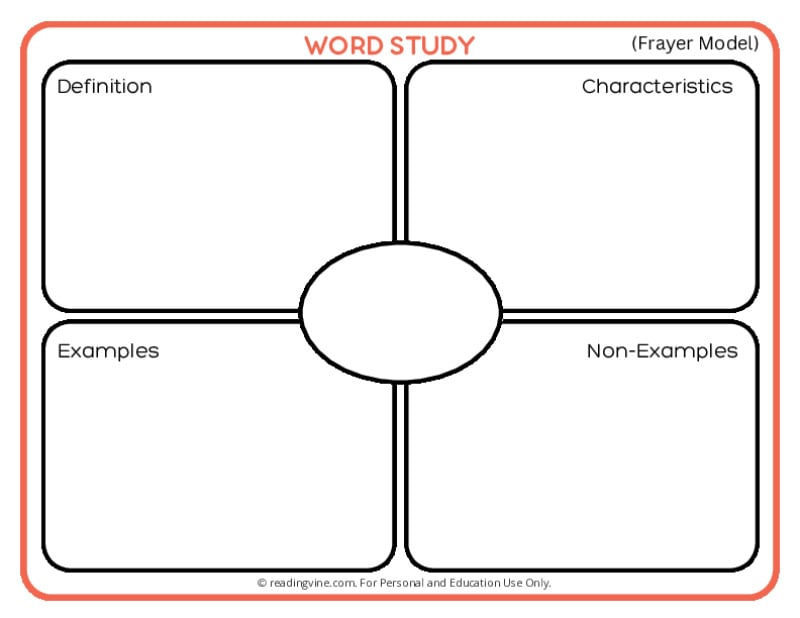
A Frayer Model is a four-square graphic organizer with the target word or concept in the center. Each quadrant prompts students to think about the word differently:
Definition
A community of living organisms interacting with their physical environment
Characteristics
- Includes biotic & abiotic factors
- Has energy flow
- Contains food chains
- Nutrient cycling occurs
Examples
- Rainforest
- Coral reef
- Desert
- Pond
Non-Examples
- A single tree
- A rock
- An aquarium
- A terrarium
Ecosystem
The power of the Frayer Model is in the “non-examples” quadrant. When students identify what something is not, they clarify the boundaries of the concept and avoid common misconceptions.
How to Use Frayer Model Templates in the Classroom
- Choose high-value words. Focus on vocabulary that students will encounter repeatedly—academic words, key concepts, or terms they’re confusing with similar words.
- Model the process first. Complete a Frayer Model together as a class before asking students to work independently. Think aloud as you decide what belongs in each quadrant.
- Discuss the non-examples. This quadrant sparks the best discussions. Why isn’t an aquarium an ecosystem? What makes it different? These conversations deepen understanding.
- Use them for review. Completed Frayer Models make excellent study tools. Have students quiz each other using their models before assessments.
- Display student work. Create a vocabulary wall with completed Frayer Models. Students can reference them during reading and writing.
Tips for Parents Using Frayer Models at Home
- Start simple. If four quadrants feel overwhelming, begin with just “definition” and “examples.” Add the other quadrants as your child gets comfortable.
- Make it hands-on. Use colored pencils, cut out magazine pictures for the examples quadrant, or create digital versions together.
- Connect to real life. Learning “fraction”? Relate it to pizza slices or sharing snacks. Real-world connections make abstract concepts concrete.
- Turn it into a game. Cover one quadrant and see if your child can guess what’s underneath. Or race to see who can come up with more examples.
- Keep them visible. Post completed Frayer Models on the fridge or in a study folder. Quick reviews over time reinforce learning.
7 results
Frayer Model Vocabulary Words Templates
PDF
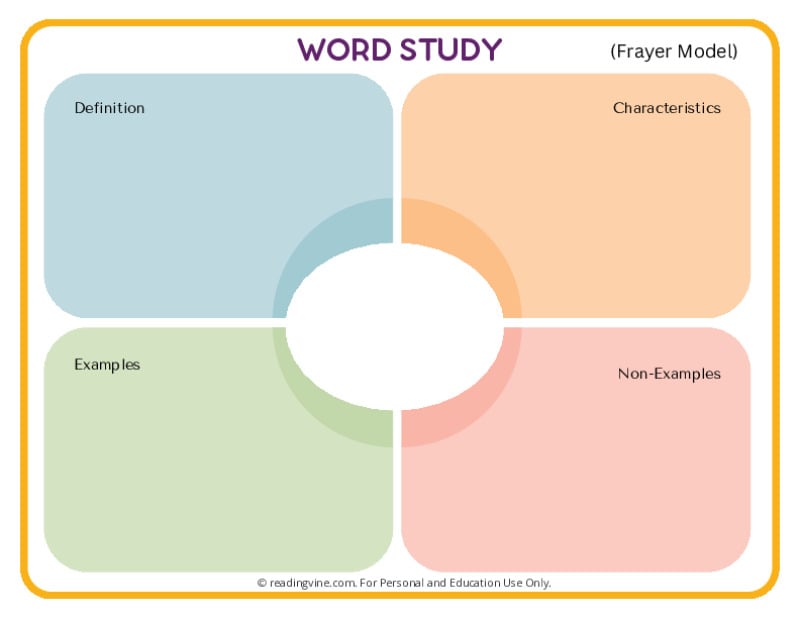
Frayer Model - Design 1
PDF
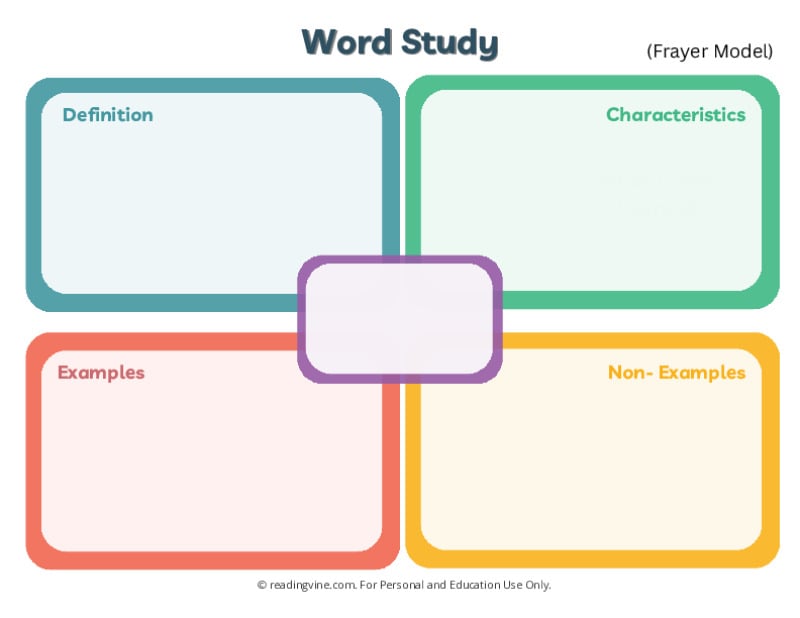
Frayer Model - Design 2
PDF
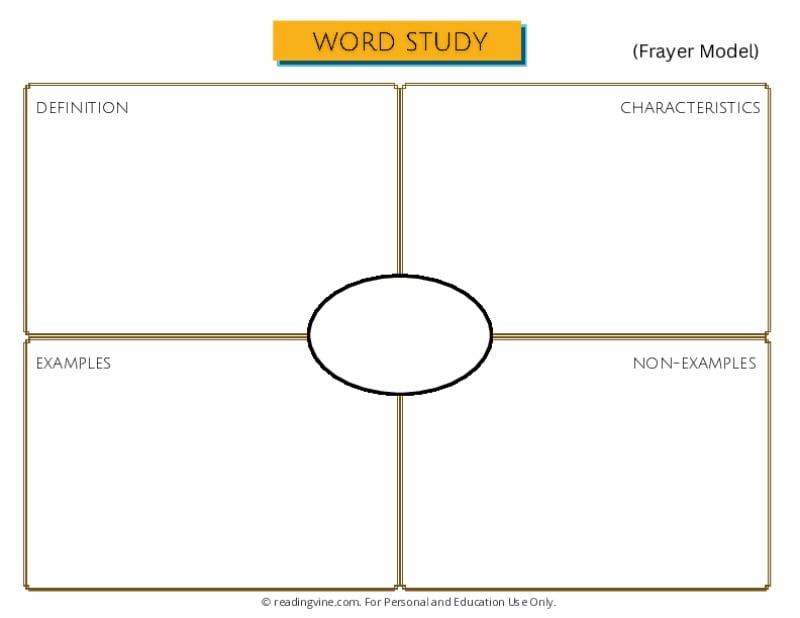
Frayer Model - Design 3
PDF
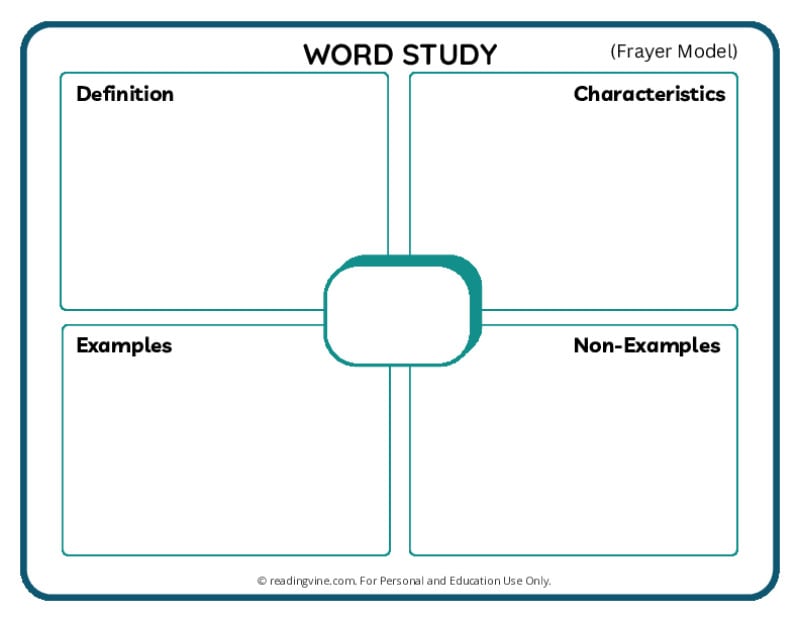
Frayer Model - Design 4
PDF
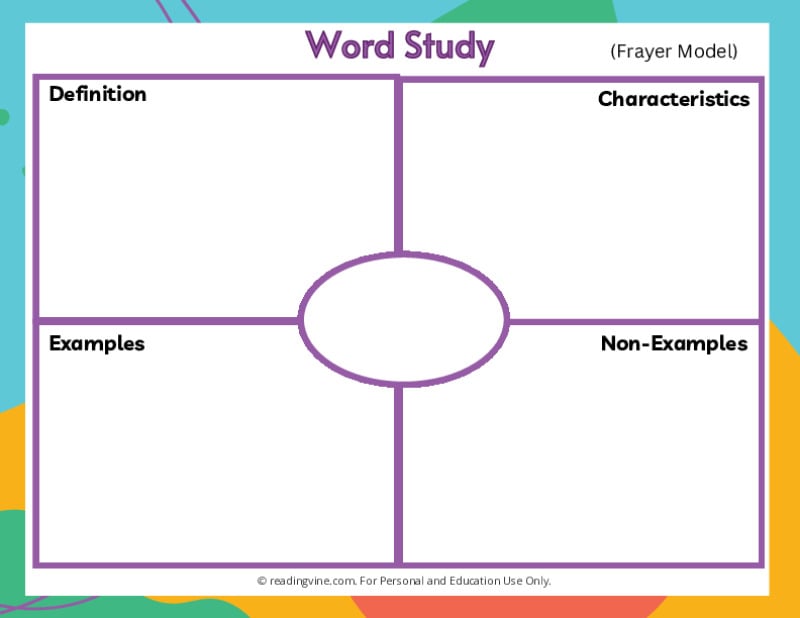
Frayer Model - Design 5
PDF

Frayer Model - Design 6
PDF